BEST OF CT 2026Help us win!
Vote HereSenior dog grooming requires a fundamentally different approach than grooming a healthy adult dog. As dogs age, their bodies change in ways that make standard grooming techniques uncomfortable or even painful — and many older dogs quietly communicate that discomfort through the only means available to them: resistance, anxiety, and stiffness. Recognizing and accommodating those changes is not just about kindness. It is about maintaining hygiene and coat health safely throughout a dog's senior years.
At Dogfather Grooming, our experienced groomers understand how aging affects a dog's body, temperament, and grooming tolerance. We adjust our technique, pace, positioning, and handling for every senior dog we see — taking more time, using gentler pressure, accommodating reduced range of motion, and monitoring carefully for signs of discomfort throughout every appointment. Grooming should never hurt, and for a senior dog, it never has to.
Our senior dog grooming service is available at our Connecticut salon locations and through our mobile grooming service — which is particularly well suited to senior dogs, eliminating the car ride and allowing grooming in a calm, familiar environment close to home. For our full range of grooming services, visit our professional dog grooming page.
One of the most common misconceptions about senior dog care is that grooming matters less as a dog slows down. In reality, the opposite is true. The physical changes that come with aging make consistent, professional grooming more important for a senior dog's health and comfort than at any other life stage.
Dogs naturally maintain some of their own coat through licking, scratching, and rolling. As arthritis, joint stiffness, and reduced flexibility set in, senior dogs lose the ability to reach many areas of their body — particularly the lower back, hindquarters, between the rear legs, and around the tail base. These are exactly the areas where matting, hygiene issues, and skin problems are most likely to develop without regular professional intervention.
Aging skin is thinner, drier, and more sensitive than the skin of a younger dog. It is more prone to irritation from shampoos, more easily nicked by careless grooming, and slower to heal from any trauma. Senior dogs also frequently develop skin conditions — seborrhea, lipomas, skin tags, and other benign growths — that a professional groomer is trained to work around carefully and flag for veterinary attention when appropriate.
Many senior dogs experience changes in coat texture as they age — coats that were once smooth and manageable can become coarser, finer, or more prone to matting. Dogs that previously needed grooming every 8 weeks may find their coat deteriorating significantly faster as they age. Increasing the frequency of professional grooming is often the right response to these coat changes rather than reducing it.
Senior dogs that have reduced their activity level no longer wear their nails down through exercise the way they did when younger. This means nails grow longer between trims, and the consequences of overgrown nails — altered gait, joint stress, paw discomfort — are far more significant for a dog already managing arthritis or mobility challenges. Regular professional nail trimming is especially critical for senior dogs.
Senior dogs are more likely to develop health issues that a trained groomer can detect during close physical examination — lumps and masses that have appeared since the last appointment, skin changes, weight loss visible through the coat, ear discharge, or swollen joints. Professional grooming appointments function as an additional layer of observation for senior dogs between veterinary visits.
Standard grooming techniques — the table height, the standing positions, the pace, the drying methods — are designed for healthy adult dogs at their physical peak. Most of these defaults are inappropriate for a senior dog, and applying them without adjustment causes unnecessary discomfort. Our senior grooming approach is built from the ground up around the physical realities of aging dogs.
If you have questions about whether your senior dog is a good candidate for salon grooming or whether our mobile service might be more appropriate, our team is happy to discuss this with you before you book. Reach out through our contact page.
Every senior dog grooming appointment at Dogfather Grooming is adapted to that individual dog's physical condition, comfort level, and coat needs. The process below reflects our standard approach — modified throughout based on what each dog needs in the moment.
Before grooming begins, we take time to speak with you about your dog's current health status — any recent changes in mobility, diagnosed conditions, medications, areas of sensitivity, or veterinary concerns we should be aware of. Owners of senior dogs are our most important source of information about what their dog can and cannot comfortably tolerate, and we take this check-in seriously.
The groomer conducts a careful coat and skin assessment, noting coat condition, any matting in areas of reduced self-grooming reach, skin dryness or irritation, lumps or growths to work around, and overall body condition. This guides every subsequent grooming decision — product selection, tool choice, and the areas of the coat that need the most careful attention.
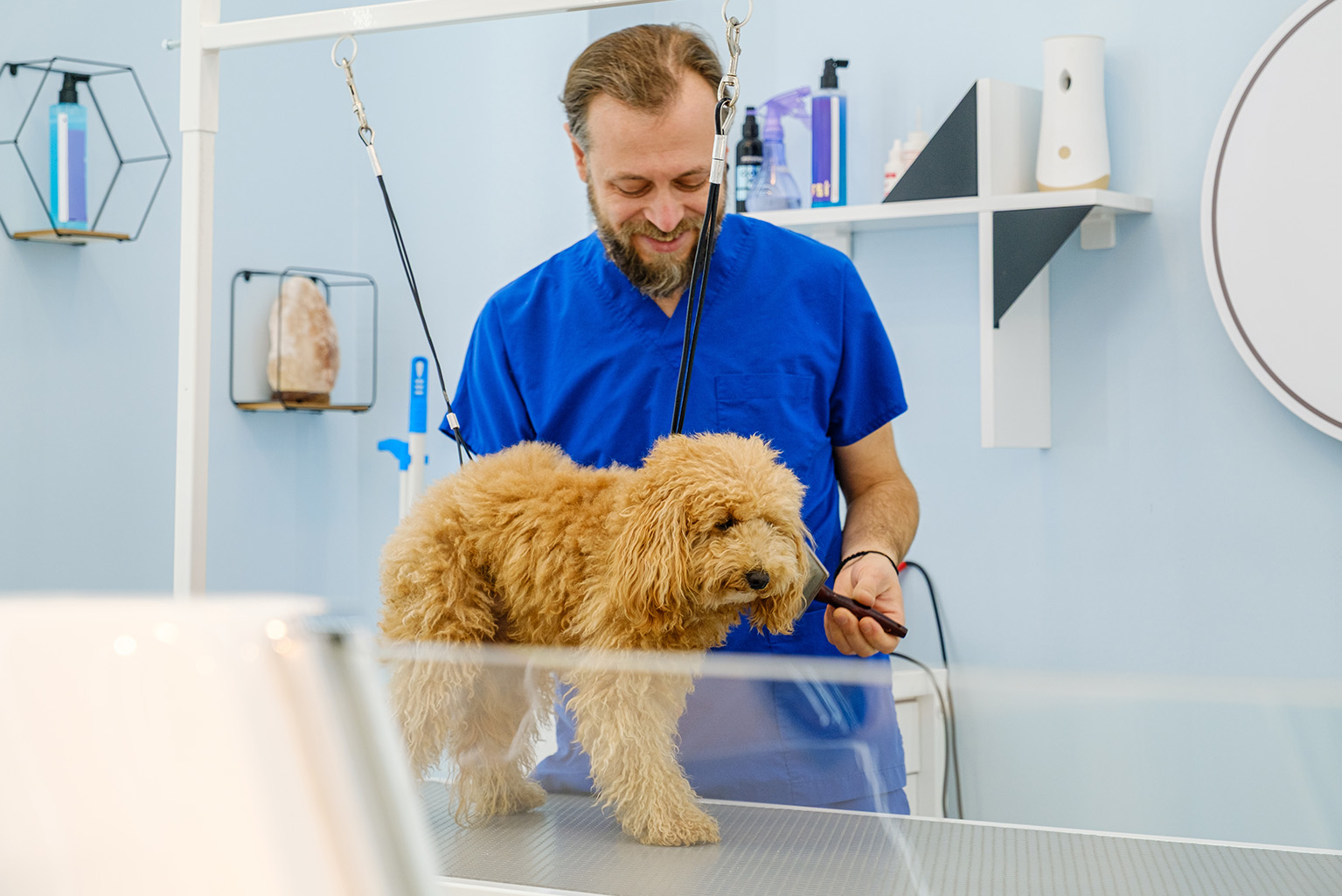
Senior dogs are given time to settle on the grooming table at their own pace. We adjust table height and positioning to minimize joint stress, and we never ask a senior dog to stand in a position that strains their hind end or forces a posture their mobility does not comfortably allow. For dogs with significant mobility limitations, much of the grooming may be performed with the dog lying down.
A thorough, gentle brush-through removes loose fur, surface debris, and addresses any matting — with particular attention to the areas senior dogs struggle to self-groom. Matted areas are worked through carefully and slowly, never pulled or forced, as skin that tears more easily in senior dogs makes aggressive mat removal genuinely harmful rather than just uncomfortable.
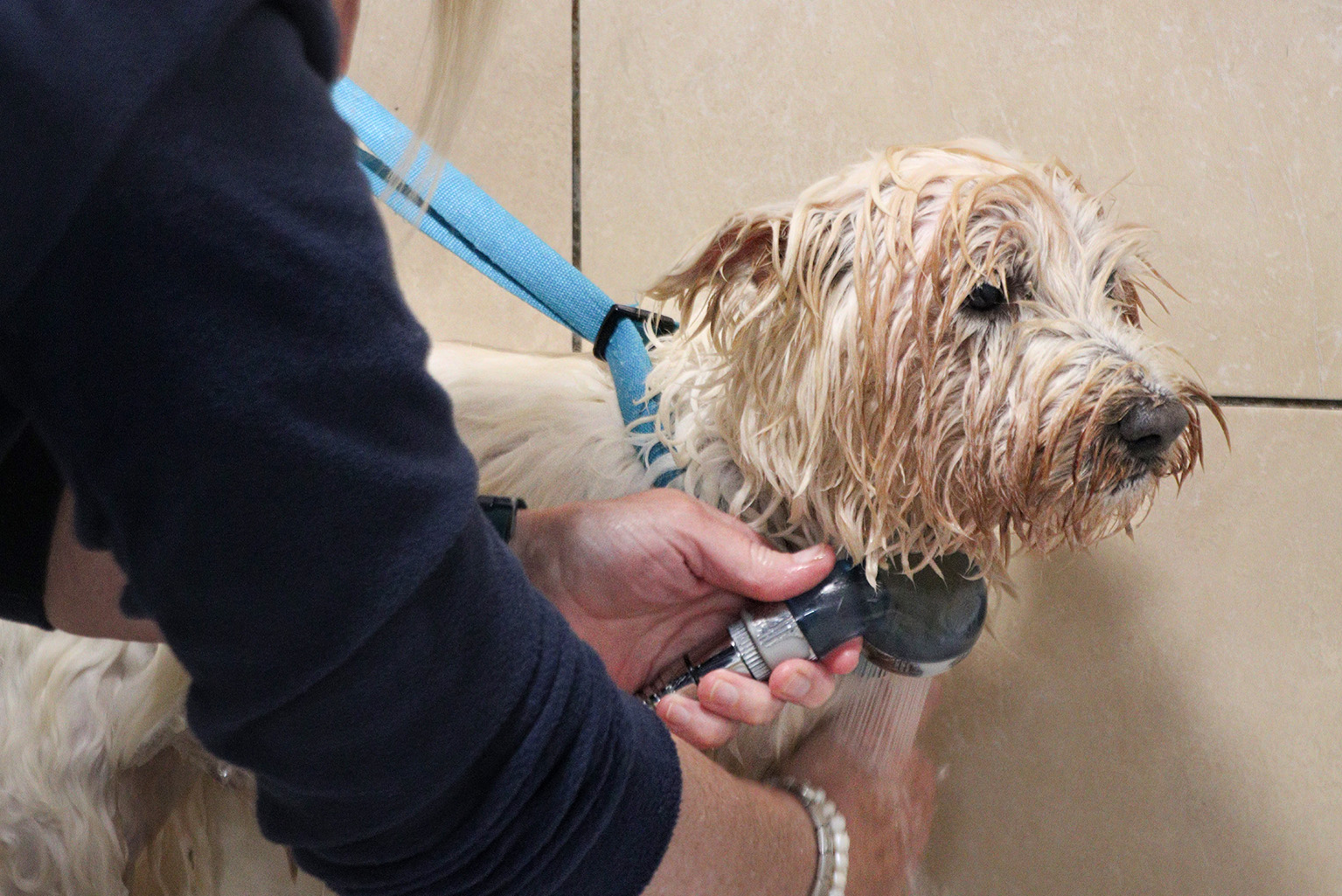
A warm bath using gentle, moisturizing shampoo appropriate for sensitive or dry aging skin. Water temperature is carefully monitored — senior dogs are less able to regulate their own temperature and more sensitive to extremes. We support senior dogs fully during bathing, ensuring they never need to bear weight awkwardly or stretch beyond what their joints comfortably allow.
The coat is dried using reduced heat settings with careful monitoring throughout. We watch for signs of overheating or stress — panting, restlessness, trembling — and pause as needed. For dogs with known heart conditions or severe heat sensitivity, we may use towel drying to a greater extent than with a younger dog.
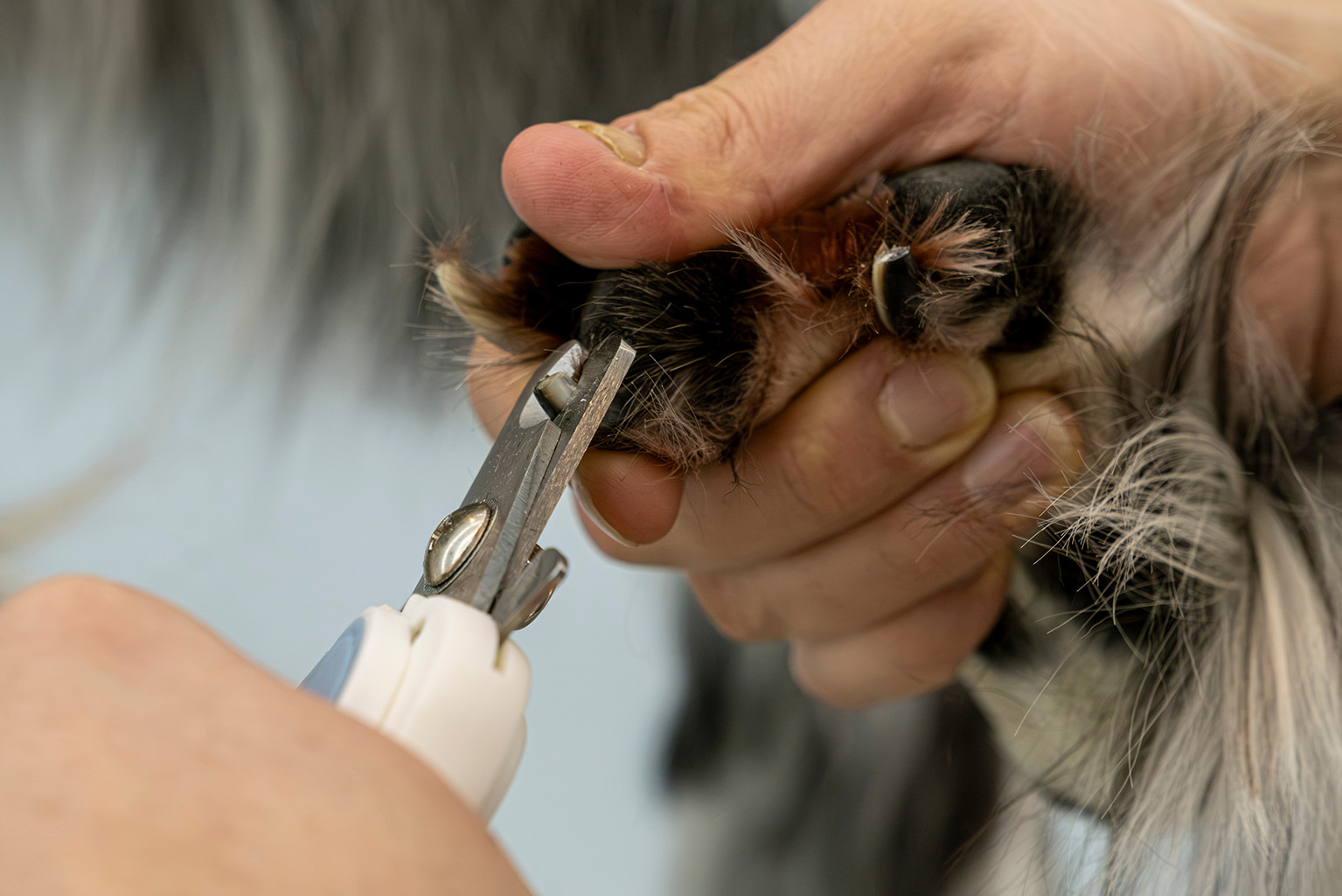
Nail trimming is performed carefully and without forcing positions that strain arthritic joints. Many senior dogs have significantly overgrown nails due to reduced activity — we trim gradually and safely, prioritizing comfort throughout. We also inspect paw pads for cracking, dryness, or the interdigital issues that become more common in older dogs.
Breed-specific or maintenance trimming is performed as appropriate for the dog's coat type and condition. We do not attempt elaborate styling on a senior dog if it requires extended standing or positioning that causes discomfort — practical comfort takes priority over perfect presentation. A clean, tidy, comfortable dog is always the right outcome.
All senior dogs benefit from the adapted approach that specialized senior grooming provides, but certain dogs have needs that make professional specialized care particularly valuable.
Arthritis is one of the most common conditions in senior dogs — estimated to affect the majority of dogs over 7 years of age to some degree. Standard grooming table positioning places significant stress on arthritic joints that a dog may not visibly protest but is genuinely experiencing. Our adjusted positioning approach removes this stress without compromising grooming quality. If your dog has been diagnosed with arthritis or you have noticed stiffness, reluctance to lie down, or difficulty rising, please let us know when booking so we can plan accordingly.
Some senior dogs have lost significant mobility due to conditions such as degenerative myelopathy, intervertebral disc disease, or hip dysplasia. Grooming dogs with limited hind-end strength or coordination requires significant modification of standard technique — more of the grooming performed with the dog lying supported, careful monitoring during position changes, and constant attention to what the dog is and is not able to comfortably hold. Our mobile grooming service is particularly valuable for dogs with severe mobility limitations, as it eliminates the physical challenge of loading into and out of a vehicle.
Long-coated breeds that have required regular professional grooming throughout their lives continue to need it in their senior years — but the process requires significantly more patience and adaptability as mobility declines. A senior Cocker Spaniel or an aging Goldendoodle with arthritis still needs their coat maintained; the technique simply needs to accommodate what their body can comfortably tolerate.
Senior dogs frequently develop dry skin, seborrhea, lipomas, skin tags, and other dermatological changes that require a groomer to work with awareness and care rather than on autopilot. Our groomers are trained to identify and work carefully around skin growths, to select appropriate products for dry or sensitive aging skin, and to flag any skin changes that appear new or concerning for owner follow-up with their veterinarian.
Owners sometimes notice that a dog who previously tolerated grooming well has begun showing resistance — growling, pulling away, trembling, or snapping during grooming that they previously accepted without complaint. In many cases, this shift reflects the onset of underlying pain that the dog was not previously experiencing. If your dog's grooming tolerance has changed, this is worth discussing with your vet, and it is essential to communicate it to your groomer so the appointment can be adapted appropriately.
Senior dog owners often have questions about how to adapt home grooming and coat care as their dog ages — which brushes are appropriate for arthritic dogs to tolerate, how to manage coat maintenance between professional appointments when a dog's grooming tolerance has declined, and when to increase professional grooming frequency. Our team is happy to share this guidance at every appointment.
Both our salon and mobile grooming services are fully capable of providing the adapted, gentle approach that senior dogs require. The right choice depends on your individual dog's mobility, temperament, and response to travel.
Salon grooming is a practical and effective option for senior dogs who travel reasonably well, who are not severely mobility-limited, and who are comfortable in grooming environments they have visited throughout their adult lives. Dogs who have been groomed at a salon their whole lives often find the familiar environment and familiar groomers reassuring rather than stressful. Our three Connecticut salon locations are available for senior dog grooming appointments — view details for our Meriden salon, Stratford salon, and Shelton salon.
Mobile grooming is often the superior option for senior dogs with significant mobility limitations, severe joint pain, or dogs who have become anxious about car travel as they age. Eliminating the car ride removes one of the most physically demanding and potentially painful parts of the salon grooming process for a senior dog — loading, unloading, and the motion of travel are all sources of joint stress that mobile grooming bypasses entirely. Grooming in a calm, familiar environment close to home also tends to reduce anxiety for dogs whose stress tolerance has declined with age. Learn more on our mobile dog grooming page.
Owners of senior dogs who maintain a consistent professional grooming schedule consistently report real, meaningful improvements in their dog's quality of life in the years that remain. These are not minor cosmetic benefits — they are health and comfort outcomes that matter enormously to aging dogs.
The more your groomer knows about your senior dog's current health status before an appointment, the better they can adapt the grooming process to your dog's specific needs. When booking or arriving for a senior dog grooming appointment, please share:
This information is always held in confidence and used only to make your dog's grooming experience safer and more comfortable.
Senior dog grooming is part of a complete approach to caring for an aging dog's coat health and physical comfort. Dogfather Grooming provides a full range of grooming services to support dogs at every life stage.
Dogfather Grooming's senior dog grooming service is available at our Connecticut salon locations and through our mobile grooming service. We recommend contacting us before your senior dog's first appointment to discuss their specific needs and confirm which service option — salon or mobile — is the better fit.
Our senior dog grooming services are available in:
View our complete service locations map to confirm senior dog grooming availability near you.
The answer varies by breed and size. Larger breeds tend to age faster — a Great Dane may be considered senior at 6 or 7, while a small terrier might not reach true senior status until 10 or 11. As a general guide, most medium-to-large dogs transition into senior status between 7 and 9 years of age. If your dog has begun showing signs of reduced mobility, stiffness, or changes in coat and skin condition, it is worth discussing a senior grooming approach with your groomer regardless of their chronological age.
Senior dog grooming uses slower pace, gentler pressure, adjusted positioning to accommodate reduced range of motion, rest breaks during longer appointments, lower-heat drying, and senior-appropriate shampoos that are gentler on aging skin. The groomer also pays closer attention to health observations — new growths, skin changes, weight changes — and communicates these to the owner. The goal and result is the same as regular grooming; the technique is adapted throughout.
A change in grooming tolerance in a senior dog is frequently a pain signal. Dogs that begin resisting grooming positions they previously accepted — particularly lifting their rear legs, extending their neck, or standing for extended periods — are often experiencing joint discomfort that makes these positions genuinely painful. We strongly recommend discussing this behavioral change with your veterinarian and informing your groomer so the appointment can be adapted accordingly.
In most cases yes, with appropriate modifications. Dogs with heart conditions need careful monitoring during drying in particular, as heat stress is a significant concern. Dogs on medications for various conditions may have shampoo or product sensitivities. Always inform your groomer of any serious health conditions before booking, and follow your veterinarian's specific guidance about grooming restrictions if any have been given.
Senior dogs often benefit from more frequent grooming than they required as adults — particularly as their self-grooming ability declines. A dog previously groomed every 8 weeks may need appointments every 5–6 weeks in their senior years. For nail trimming specifically, senior dogs with reduced activity typically need trimming every 3–4 weeks. See our general grooming FAQ: How often should I have my pet groomed?
For senior dogs with significant mobility limitations, severe joint pain, or anxiety about car travel, mobile grooming is usually the better choice — it eliminates the physical demands of vehicle loading and the stress of travel entirely. For senior dogs who travel reasonably well and are familiar with salon grooming, salon appointments remain a practical option. Our team is happy to discuss your dog's specific situation before you book — reach out through our contact page.
Yes — and we encourage you to mention when booking that your dog is a senior so we can allocate appropriate time from the start. We do not rush senior appointments. If you have specific concerns about your dog's ability to tolerate a full grooming session, let us know and we can discuss options including splitting services across two shorter appointments. Book through our salon booking page or mobile booking page.
Senior dog grooming appointments may take longer than a standard adult grooming appointment due to the additional care, rest breaks, and positioning adjustments involved. Additional time requirements are communicated transparently before proceeding. See our FAQ on fees: Are extra fees likely and is gratuity customary?
Your senior dog has given you years of loyalty and companionship. Professional grooming adapted to their aging body is one of the most meaningful ways to support their comfort, hygiene, and quality of life in the years ahead. Dogfather Grooming's experienced team is ready to provide the patient, gentle, specialized care your older dog deserves.
Senior dog grooming appointments are available at our Meriden, Stratford, and Shelton salon locations, and via our mobile grooming service for dogs best served at home. Book online through our salon booking page, or contact us through our contact page to discuss your senior dog's specific needs before booking. We are always happy to help you find the right approach for your dog.
Our experienced and compassionate groomers are waiting to help you and your pet have the most comfortable experience possible.
We believe that your best friend deserves the best care. Come see us to get your pet the care it deserves!