Gentle Puppy Grooming Services for a Positive First Grooming Experience
Puppy grooming is about far more than keeping a young dog clean. The first several grooming appointments a puppy has set the tone for how they will respond to grooming for the rest of their life. A positive, patient, low-pressure first experience creates a dog that tolerates — and eventually accepts — grooming without stress. A rushed or overwhelming first experience can create lasting anxiety that makes every future appointment more difficult for years to come.
At Dogfather Grooming, our puppy grooming service is built around patience, gentleness, and reading each puppy’s individual comfort level. We understand that young dogs are experiencing many things for the first time — the sounds of a grooming salon, the feeling of water and dryers, the handling of their paws and face. Our approach is to introduce each element gradually, keep sessions appropriately short, and ensure that every puppy leaves their first grooming appointment with a neutral-to-positive association with the process.
Whether your puppy is a doodle needing their first trim, a long-coated breed starting coat maintenance early, or any breed benefiting from gentle handling introduction, our team is ready to make their first grooming experience a great one. Looking for ongoing full grooming services? Visit our professional dog grooming page for details on our complete grooming services for dogs of all ages.
Why Starting Puppy Grooming Early Makes a Lifelong Difference
The window between 8 and 16 weeks of age is one of the most important developmental periods in a dog’s life. During this socialization window, puppies are wired to absorb new experiences and form lasting associations — positive or negative — with the stimuli they encounter. Grooming is one of the most valuable things you can introduce during this period.
Here is why early professional grooming matters so much more than most new puppy owners realize:
Early Grooming Builds Permanent Tolerance
Dogs that are introduced to gentle grooming handling — paw touching, ear examination, face handling, body contact — during the socialization period develop a baseline tolerance for these interactions that persists throughout their adult life. Dogs that miss this window and encounter grooming for the first time as adults often require significantly more time, patience, and sometimes behavioral intervention to reach the same level of acceptance.
First Experiences Set Lasting Associations
A puppy’s first grooming experience creates an association — either broadly positive, neutral, or negative — that colors every subsequent grooming appointment. A calm, unhurried first groom at a quality grooming salon is one of the most valuable investments a new puppy owner can make for their dog’s long-term behavior and quality of life.
Coat Management Starts Earlier Than Most Owners Expect
For long-coated, curly-coated, and double-coated breeds, the transition from puppy coat to adult coat is a critical period for establishing grooming routines. Doodle breeds in particular can begin developing matting during the coat transition — sometimes as early as 6 months of age — making early professional grooming an urgent practical need, not just a behavioral investment.
It Makes Your Groomer’s Job Easier — Forever
A dog that has been properly introduced to grooming from an early age is faster, safer, and more enjoyable to groom throughout their entire life. This means shorter appointments, lower stress for your dog, and often lower cost for you over the long run. The investment in proper early grooming pays dividends at every subsequent appointment for the next decade or more.

Our Puppy-Friendly Grooming Approach at Dogfather Grooming
Puppy grooming requires a fundamentally different mindset than adult dog grooming. Speed and efficiency — priorities in a standard grooming appointment — take a back seat to patience, observation, and positive association building. Our groomers are trained to work at the puppy’s pace, not the groomer’s schedule.
Key elements of our puppy grooming approach:
- Calm, low-stimulation environment — puppies are especially sensitive to noise, unfamiliar smells, and busy environments; we minimize these stressors throughout the appointment
- Gentle, deliberate handling — every touch is intentional and considerate; we handle paws, ears, face, and body in ways that build confidence rather than create apprehension
- Age-appropriate appointment length — first groom appointments are kept shorter than a full adult grooming session to avoid overwhelming a young dog’s attention span and stress threshold
- Positive reinforcement throughout — our groomers use praise, calm voices, and patience to create positive associations with each stage of the grooming process
- Gradual tool introduction — clippers, dryers, and grooming tools are introduced gradually rather than applied all at once; for particularly sensitive puppies we may focus the first appointment on handling and bathing only
- No rushing, no forcing — if a puppy reaches their stress limit during an appointment, we pause, reassure, and adjust — never push through at the expense of the puppy’s experience
- Clear communication with owners — we share observations about your puppy’s comfort level, coat condition, and any areas to work on at home between appointments so you can continue building on the progress made in the salon
Want to know when your puppy is ready for their first professional groom? See our FAQ: How old does a puppy need to be for the first groom?
Our Puppy Grooming Process — Step by Step
A puppy’s first grooming appointment is intentionally structured to introduce each element of the grooming process gradually and positively. The exact services completed will depend on your puppy’s age, breed, coat condition, and comfort level — but here is what a typical Dogfather puppy grooming appointment looks like.
Step 1 — Meet and Greet — Building Initial Trust
Before any grooming begins, our groomer takes time to simply let your puppy settle, sniff around, and become comfortable with their surroundings and with the person handling them. This step is never skipped. A puppy that is still in an anxious flight response is not ready to be groomed — and rushing past this stage is one of the most common mistakes that creates lasting grooming anxiety.
Step 2 — Coat and Skin Assessment
The groomer gently examines your puppy’s coat condition, checking for any matting beginning to form, skin health, and the overall state of the coat. For puppies in the coat transition phase — particularly doodle and long-coat breeds — this assessment helps identify any areas of concern that need immediate attention.
Step 3 — Gentle Brushing and Detangling
A gentle brush-through introduces your puppy to the sensation of being brushed and removes any surface tangles. For puppies with very short or minimal coats, this step may be brief — for long-coated or curly-coated breeds, it is more extensive and serves as important early conditioning for the brushing routines these dogs will need throughout their lives.
Step 4 — Light Bath with Puppy-Safe Products
Puppies receive a gentle bath using mild, puppy-appropriate shampoos that are gentle on sensitive young skin. Water temperature is carefully monitored. We introduce the experience of bathing gradually — particularly the sensation of water on the face and head, which many puppies find most startling — building comfort with each step.
Step 5 — Careful Drying
Drying is one of the most significant challenges for many puppies — the noise and sensation of a dryer can be alarming to a young dog experiencing it for the first time. We use the lowest appropriate heat and airflow setting, introduce the dryer gradually from a distance, and give puppies time to adjust to the sensation before moving closer. For extremely sensitive puppies, towel drying may be used partially or fully on a first appointment.
Step 6 — Nail Trimming Introduction
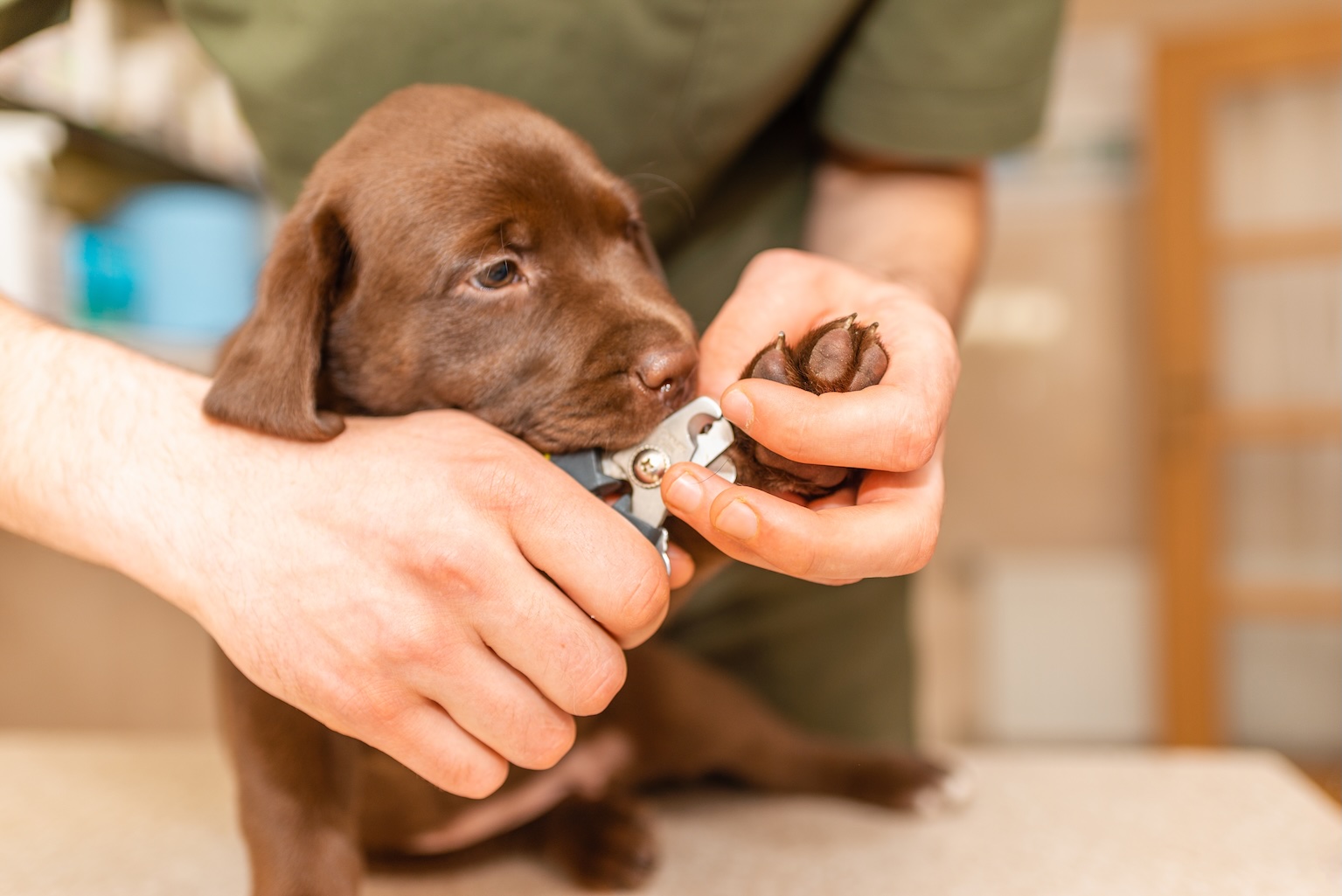
Paw handling and nail trimming are introduced gently. For puppies that are comfortable, a full nail trim is completed at the first appointment. For puppies that are highly resistant to paw handling — which is very common — we may do a partial trim or focus primarily on building paw-handling tolerance, completing the full trim at a subsequent appointment.
\
Step 7 — First Trim or Style (Where Appropriate)
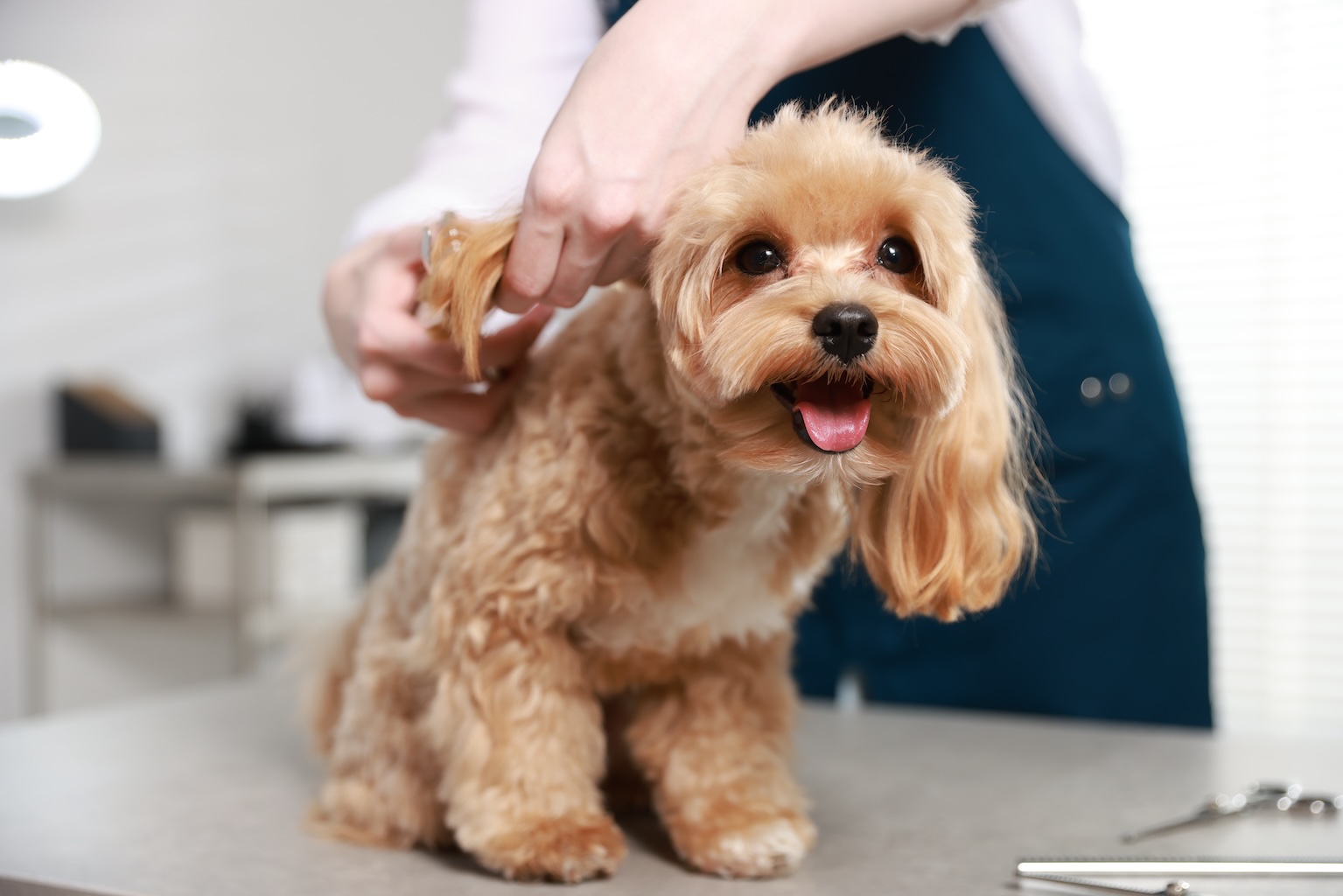
For breeds that need regular trimming — doodles, long-coated breeds, and others — a light introductory trim is performed where the puppy’s comfort level allows. The goal is not to achieve a perfect show-quality cut on a first appointment, but to introduce the puppy to the sensation of clippers and scissors while maintaining a positive experience throughout.
Which Puppies Benefit Most From Early Professional Grooming
While all puppies benefit from early grooming introduction, certain breeds and coat types have needs that make professional grooming an urgent priority from a very early age.
Doodle Breeds — Goldendoodles, Labradoodles, Bernedoodles, and All Crosses
Doodle breeds are among the most grooming-intensive dogs in existence. Their curly or wavy coats do not shed in the traditional sense — instead, loose fur stays in the coat and mats rapidly, particularly during the coat transition from puppy to adult coat that typically occurs between 6 and 12 months of age. Without regular professional grooming starting early, doodle coats can become severely matted in a matter of weeks. Starting professional grooming at or shortly after the first vaccination series is essential for these breeds — not optional.
Long-Coated Breeds — Shih Tzus, Maltese, Yorkies, Cocker Spaniels, and Setters
Long-coated breeds require regular professional grooming to prevent matting and maintain coat health throughout their lives. Introducing these breeds to professional grooming during puppyhood — before the coat is long enough to mat significantly — establishes the grooming routine they will need for the next decade and beyond, and builds the handling tolerance that makes adult grooming appointments manageable.
Double-Coated Breeds Learning Grooming Handling
Breeds like Huskies, Golden Retrievers, German Shepherds, and Bernese Mountain Dogs develop heavy coats that require professional de-shedding and grooming care throughout their lives. Even though their puppy coats are typically softer and more manageable, introducing these breeds to professional grooming early builds the handling tolerance that makes adult grooming — and particularly the intensive de-shedding treatments these breeds require — significantly easier.
Any Breed With a New Owner Seeking Lifelong Grooming Ease
Even short-coated breeds that require minimal actual grooming — Beagles, Boxers, Dalmatians — benefit from early professional grooming introduction. Dogs that are accustomed to being handled by groomers from puppyhood are dramatically easier to manage for nail trimming, ear cleaning, and any grooming-related veterinary procedures throughout their lives. The investment in early grooming goes well beyond coat maintenance.
Puppies That Have Shown Sensitivity During Home Handling
If your puppy reacts strongly to having their paws touched, their ears examined, or their face handled at home, early professional grooming introduction is especially important. Our groomers are trained in desensitization handling techniques that build tolerance more systematically than most owners can replicate at home — and addressing handling sensitivity early produces dramatically better outcomes than waiting until it becomes a significant behavioral problem.
The Long-Term Benefits of Starting Puppy Grooming Early
The benefits of early professional puppy grooming compound over time. Every positive grooming experience a puppy has builds on the last, creating a progressively more cooperative and confident dog. Here is what owners who start grooming early consistently experience:
- A dog that is easier and faster to groom throughout their entire life — the single most reported benefit from owners who started grooming early and consistently
- Reduced grooming anxiety as an adult — dogs that have consistent early grooming exposure rarely develop the severe grooming anxiety that makes adult dog grooming difficult for both the dog and the groomer
- Prevention of coat matting during the coat transition — critical for doodle and long-coat breeds, where missing the transition period can result in severe matting requiring full shave-downs
- Better veterinary handling tolerance — dogs accustomed to professional grooming handling are significantly easier to examine, treat, and medicate throughout their lives
- Established grooming schedule from day one — starting grooming early makes it a normal, expected part of your dog’s routine rather than a periodic stressful event
- Healthier skin and coat throughout life — dogs maintained on regular grooming schedules from puppyhood consistently have better coat and skin health throughout their lives
- Early identification of health concerns — regular professional grooming from an early age creates regular, consistent observation of your puppy’s skin, coat, ears, nails, and paws by trained eyes
When Should Your Puppy Have Their First Grooming Appointment?
This is the question most new puppy owners ask — and the answer depends on your puppy’s vaccination status and breed.
Vaccination Requirements First
Most grooming salons, including Dogfather Grooming, require that puppies have completed at least their initial vaccination series before their first grooming appointment. This typically means your puppy is ready at around 12–16 weeks of age, though the exact timing depends on your veterinarian’s vaccination schedule. Check our FAQ for details: How old does a puppy need to be for the first groom?
The Earlier the Better — Within the Vaccination Window
Once your puppy’s vaccinations allow for their first grooming appointment, the earlier you book, the better. The socialization window closes progressively after 16 weeks, and while puppies can absolutely learn to tolerate grooming after this age, the process is generally faster and easier the younger they start. Do not wait until your puppy’s coat is a problem — book their first appointment as soon as their vaccination status allows.
Special Note for Doodle Breeds — Urgency Applies
For Goldendoodles, Labradoodles, Bernedoodles, and other doodle crosses, the timing advice is different from other breeds: book your puppy’s first grooming appointment as early as their vaccination status allows — do not wait. Doodle coats can begin matting during the puppy-to-adult coat transition as early as 6 months of age, and the coat transition happens whether or not the dog is being groomed. Starting early is not just behavioral preparation for these breeds — it is urgent coat care.
How Often After the First Appointment?
Following the first grooming appointment, most puppies benefit from a grooming appointment every 4–8 weeks depending on their coat type. Long-coated and doodle breeds should be on the shorter end of this range from the beginning. See our FAQ for general grooming frequency guidance: How often should I have my pet groomed?
How to Prepare Your Puppy at Home Before Their First Grooming Appointment
There is meaningful work you can do at home between now and your puppy’s first grooming appointment that will make the experience significantly better for your dog. None of it requires professional equipment or training — just consistency and patience.
- Touch your puppy’s paws daily — gently handle each paw, touch between the toes, and simulate the pressure of nail trimming. Paw sensitivity is one of the most common sources of grooming resistance, and daily desensitization at home makes a significant difference
- Handle ears, face, and mouth regularly — gently lift ear flaps, touch the muzzle, and open the mouth briefly. Making this a normal part of daily interaction prepares your puppy for the face and ear handling that happens at every grooming appointment
- Brush your puppy at home between appointments — even short sessions of gentle brushing familiarize your puppy with the sensation and help prevent matting from developing between professional appointments. Ask your groomer at the first appointment which brush type is right for your puppy’s coat
- Introduce your puppy to gentle water exposure — bath experiences at home before the first professional groom reduce the novelty of bathing in the salon. Keep home baths positive and low-pressure
- Keep all handling interactions short and positive — end every handling session before your puppy reaches their stress limit, always on a positive note. Five calm seconds of paw handling every day is far more valuable than one stressful two-minute session
For tips on keeping your puppy’s coat in good condition between professional appointments, see our blog post: How can I avoid my pet getting matted between grooms?
Related Grooming Services at Dogfather Grooming
Puppy grooming is the beginning of a lifelong grooming relationship. As your puppy grows into an adult dog, Dogfather Grooming offers the full range of professional grooming services to keep them healthy, comfortable, and looking their best at every stage of life.
Our professional dog grooming team proudly serves pet owners in:
- Professional Dog Grooming – Full grooming services for adult dogs of all breeds and sizes
- Mobile Dog Grooming — Professional grooming delivered to your home — great for anxious young dogs
- Dog Nail Trimming – Standalone nail trimming available between full grooming appointments
- Senior Dog Grooming – Adapted grooming care for dogs in their later years
- De-Shedding Treatment – Professional undercoat removal for heavy-shedding breeds as they mature
Puppy Grooming Service Areas in Connecticut
Dogfather Grooming’s puppy grooming service is available at our Connecticut salon locations and through our mobile grooming service. First-groom appointments are available at all three salon locations — we recommend calling ahead to discuss your puppy’s breed and first-groom expectations so we can set aside appropriate time.
Our puppy grooming services are available in:
View our full service locations map to confirm coverage in your area.
Frequently Asked Questions About Professional Dog Grooming
-
Most grooming salons require that puppies have completed their initial vaccination series before their first appointment — typically around 12–16 weeks of age depending on your veterinarian’s schedule. See our full FAQ answer: How old does a puppy need to be for the first groom?
-
A puppy’s first grooming appointment is structured differently from a standard adult groom. We prioritize the puppy’s comfort and positive experience over completing a perfect full groom. The appointment typically includes a gentle meet-and-greet, coat assessment, light brushing, a gentle bath with puppy-safe products, careful drying, nail trimming where the puppy’s comfort allows, and an introductory trim where appropriate.
-
First-groom appointments are generally shorter than a full adult grooming session — typically 45 minutes to 1.5 hours depending on the puppy’s breed, coat, and individual comfort level. We do not rush puppy appointments to fit a schedule. If a puppy needs more time to settle, we take it.
-
For doodle breeds, it is almost never too early — as long as vaccination requirements are met. Doodle coats begin transitioning from puppy coat to adult coat between 6 and 12 months of age, and this transition is when matting typically begins. Starting professional grooming before the transition ensures your puppy’s coat is being professionally maintained when it matters most, and builds the handling tolerance doodle breeds need for their extensive lifelong grooming requirements.
-
Mild uncertainty or wariness is completely normal for a puppy’s first grooming appointment. Our groomers are trained to recognize stress signals and respond by slowing down, reassuring, and adjusting the approach rather than pushing through. In some cases, a first appointment may focus primarily on handling introduction and bathing, completing additional grooming services at a follow-up appointment once the puppy is more comfortable.
-
Most puppies benefit from grooming every 4–8 weeks depending on their breed and coat type. Long-coated and doodle breeds should be on the 4–6 week end of this range to prevent matting during the coat transition. See our general grooming frequency FAQ: How often should I have my pet groomed?
-
Yes. Our mobile grooming service is an excellent option for puppies, as the familiar home environment can make the grooming experience less overwhelming than a salon visit. Learn more about mobile grooming for puppies on our mobile dog grooming page.
-
In most cases, it is better for the puppy if the owner waits outside the grooming area. Puppies with their owner present often focus on getting back to their owner rather than settling into the grooming process — and can become more distressed when unable to do so. Our team will give your puppy their full attention and contact you immediately if any concern arises.
Book Your Puppy’s First Grooming Appointment Today
Starting your puppy’s grooming journey on the right foot is one of the most valuable investments you can make for their long-term behavior, comfort, and coat health. Dogfather Grooming’s patient, experienced team is ready to make your puppy’s first grooming appointment a positive, confidence-building experience.
Puppy grooming appointments are available at our Meriden, Stratford, and Shelton salon locations, and via our mobile grooming service. Book online through our salon booking page or reach out through our contact page — we are happy to discuss your puppy’s breed, coat type, and what to expect at their first appointment before you book.